The FCC rule on robots made outside the US
Since Jul 28, 2026, the FCC won’t authorize new robots made outside the US for sale here, unless the Department of War gives a Conditional Approval. Models the FCC authorized before then can still be sold, and robots you already own aren’t affected. It covers humanoids and, by the FCC’s definition, robot vacuums, mowers and pool robots too. We read the FCC’s own pages on Nov 16, 2026.
At a glance
- Rule addedJul 28, 2026, on the FCC’s Covered List
- CoversHumanoids, robot vacuums, robot mowers and pool robots made outside the US. Window robots: the FCC doesn’t say
- Robots you ownNo restriction on using them, and updates and repairs carry on
- Already authorizedThose models can still be imported and sold
- ExceptionA Conditional Approval from the Department of War: 15 for robots so far
What the rule does
It stops new authorizations, not sales of models already authorized.
On Jul 28, 2026 the FCC added this entry to its Covered List: “Foreign-produced advanced robotic devices, except advanced robotic devices which have been granted a Conditional Approval by DoW.”
Anything with a radio (Wi‑Fi, Bluetooth, mobile data) needs FCC authorization before it can be imported or sold in the US. Equipment on the Covered List can’t get one, by certification (an FCC ID) or by the simpler self-declaration route.
So a new robot made outside the US is, in the FCC’s words, “generally prohibited” from being authorized, unless the Department of War gives it a Conditional Approval (FAQ on robots).
The FCC says the action is “country neutral”: it isn’t aimed at any one country, and the maker’s nationality doesn’t matter. Where the robot is made does.
Which robots it covers
Mobile robots that find their own way on the ground and connect to a network.
The FCC’s definition of an “advanced robotic device”, in short. All four must be true:
- It moves, navigates or avoids obstacles on the ground. The FCC names autonomous mobile robots, humanoids and quadrupeds.
- It works at a distance from the person in charge, on commands or from what its sensors see.
- With its dock or base station, it weighs over 4.4 lb.
- It has a sensor that perceives its surroundings, a network connection of at least 200 kbps (Wi‑Fi, Bluetooth, mobile data, satellite or wired), and software that controls how it moves, what it senses or how it’s commanded.
Left out by the definition: cars and other connected vehicles, rail vehicles, drones, unmanned underwater vehicles, FDA medical devices (wheelchairs and walkers included), and fixed robot arms for factories or medicine.
Pool robots: the FCC’s FAQ says pool robots that also work at the surface are not left out by the underwater-vehicle exclusion.
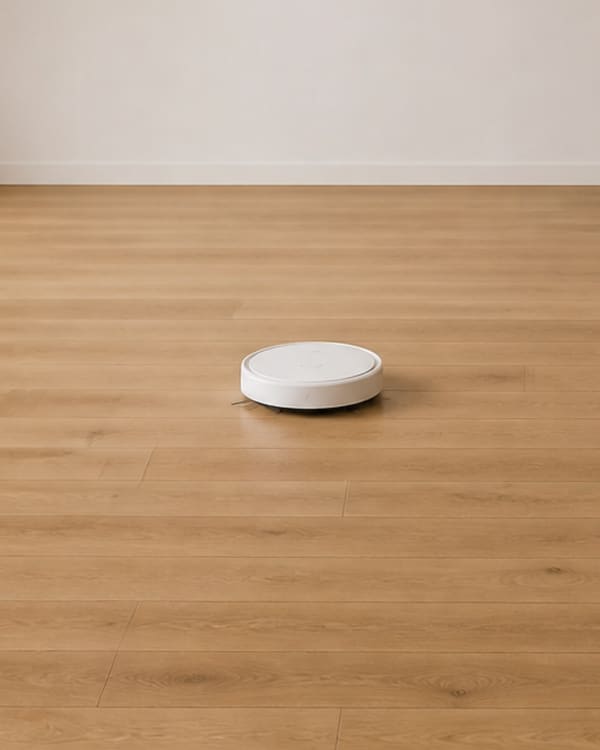
Robot vacuums and mowers: they fit the definition as written, and the FCC has given Conditional Approvals to a robot floor cleaner and to robot mowers (below).
Window robots: the definition is about moving “on the ground”. Window robots climb glass, and the FCC doesn’t say whether they count. We don’t guess.
What it doesn’t change
Robots already authorized, and the ones you own.
- Models the FCC authorized before the rule can still be imported, marketed and sold.
- There’s no restriction on using a robot you already have.
- Robots on the list can keep getting basic software and firmware updates, under an FCC waiver.
- Repairs, and replacing a part with an identical part, aren’t prohibited.
One limit: a covered robot bought abroad that never had FCC authorization generally can’t be operated in the US, the FCC says.
The FCC also has a separate process to stop sales of equipment it authorized before a Covered List entry. It needs a public notice and at least 30 days for comment. As of Nov 16, 2026, no robot is on that list.
What “made outside the US” means
The FCC uses the federal Buy American test.
A robot counts as made in the US only if it’s manufactured in the US and US-made parts are more than 65% of the cost of all its parts (for items delivered 2024 to 2028; 75% from 2029). Anything else counts as foreign-produced.
So a US company’s robot built abroad is covered, and a foreign company’s robot built in the US to that test isn’t.
Makers don’t always say where a robot is made. Where a robot page has a “Made in” row, it’s the maker’s own words.
Conditional Approvals so far
15 for robots, as of the FCC’s list updated Nov 6, 2026.
Most are warehouse and factory robots. Two are robots for homes:
- Matic Robots, Inc.: Robotic Floor Cleaner Model 4MA0001 and Charging Dock Model 4DK0008 (Oct 2, 2026)
- Husqvarna AB: 305v IQ, 310v IQ, 420v IQ and 440v IQ robotic platforms (Sep 9, 2026)
None of the robots we list has one. Husqvarna’s approval names other Automower models, not the 410iQ we list.
Makers ask for one by email to the FCC, which passes it to the Department of War.
The robots we list
13 of 58 matched to an FCC record; all 13 granted before the rule.
We only match a robot to an FCC record when the maker’s own US page or manual gives a model number the FCC ID carries (how we check). Most makers don’t give one, so “no record matched” means we couldn’t tie a record to the model, not that it has none.
Robots with a radio generally need FCC authorization to be sold in the US. Not ranked.
Robot vacuums
- Dreame L60 Ultra PE: No FCC record matched to this model yet
- Dreame X60 Max Ultra Complete: No FCC record matched to this model yet
- Ecovacs Deebot T90 Pro Omni: FCC ID 2A64B-DEX95, granted Jan 5, 2026, before the rule
- Ecovacs Deebot X12 OmniCyclone: FCC ID 2A64B-DEX35, granted Jan 28, 2026, before the rule
- eufy Omni C28: No FCC record matched to this model yet
- eufy Omni S2: No FCC record matched to this model yet
- iRobot Roomba 105 Vac: No FCC record matched to this model yet
- iRobot Roomba Max 875 Combo: No FCC record matched to this model yet
- iRobot Roomba Plus 678 Combo: No FCC record matched to this model yet
- MOVA Mobius 60: No FCC record matched to this model yet
- MOVA V70 Ultra Complete: No FCC record matched to this model yet
- Narwal Freo 20: FCC ID 2A942YJCC040, granted Jun 16, 2026, before the rule
- Roborock Qrevo Edge 3 Pro: FCC ID 2AN2O-RRE0VIF01, granted Apr 30, 2026, before the rule
- Roborock Saros 20: FCC ID 2AN2O-RRE0CPS01, granted Dec 16, 2025, before the rule
Pool robots
- Aiper Scuba X1: FCC ID 2BD5N-SCUBAX1, granted Mar 6, 2025, before the rule
- Beatbot AquaSense 2: No FCC record matched to this model yet
- Beatbot Sora 70: No FCC record matched to this model yet
- Dolphin Nautilus CC Plus: No FCC record matched to this model yet
- MOVA Rover X10: No FCC record matched to this model yet
- Wybot C2: No FCC record matched to this model yet
Robot mowers
- Ecovacs GOAT A2000 LiDAR Pro: FCC ID 2A64B-MR2507C, granted Dec 17, 2025, before the rule
- eufy E15: No FCC record matched to this model yet
- Husqvarna Automower 410 iQ: No FCC record matched to this model yet
- Mammotion Luba 3 AWD: No FCC record matched to this model yet
- Mammotion Yuka Mini 2: No FCC record matched to this model yet
- Segway Navimow i210 AWD: No FCC record matched to this model yet
- Segway Navimow X430 AWD: No FCC record matched to this model yet
- Worx Landroid Vision AI: FCC ID 2ASC3WR220, granted Aug 31, 2023, before the rule
Window robots
- Ecovacs WINBOT mini: FCC ID 2A64B-WG841, granted Nov 20, 2024, before the rule
- Ecovacs WINBOT mini 2: FCC ID 2A64B-WG853, granted Jan 13, 2026, before the rule
- Ecovacs WINBOT W2 PRO OMNI: No FCC record matched to this model yet
- Ecovacs WINBOT W2S: FCC ID 2A64B-WG891, granted May 20, 2025, before the rule
- Ecovacs WINBOT W2S OMNI: No FCC record matched to this model yet
- Ecovacs WINBOT W2S PRO: No FCC record matched to this model yet
- Ecovacs WINBOT W2S PRO OMNI: FCC ID 2A64B-WE005V01, granted May 13, 2026, before the rule
- Ecovacs WINBOT W3 OMNI: FCC ID 2A64B-WG858, granted Jan 5, 2026, before the rule
Humanoids
- 1X NEO: No FCC record matched to this model yet
- Fauna Sprout Creator Edition: No FCC record matched to this model yet
- FF Master: No FCC record matched to this model yet
- FF Master Mini: No FCC record matched to this model yet
- FF Nova: No FCC record matched to this model yet
- Figure 03: No FCC record matched to this model yet
- Flourish Robots Flourish 1: No FCC record matched to this model yet
- Fourier GR-3: No FCC record matched to this model yet
- Genesis AI Eno: No FCC record matched to this model yet
- LG CLOiD: No FCC record matched to this model yet
- Mentee Robotics MenteeBot: No FCC record matched to this model yet
- NEURA Robotics 4NE1: No FCC record matched to this model yet
- Noetix Bumi: No FCC record matched to this model yet
- Sunday Robotics Memo: No FCC record matched to this model yet
- SwitchBot onero H1: No FCC record matched to this model yet
- Tesla Optimus: No FCC record matched to this model yet
- Tuesday Labs Voxel Series-1: No FCC record matched to this model yet
- Unitree G1: No FCC record matched to this model yet
- Unitree R1: No FCC record matched to this model yet
- Unitree R1 Air: No FCC record matched to this model yet
- Unitree R1 EDU: No FCC record matched to this model yet
- Weave Isaac 1: No FCC record matched to this model yet
How we keep this current
Read on the FCC’s own pages, Nov 16, 2026.
We read the FCC’s Covered List and its FAQ on robots at each weekly price check. When the entry, the definition or the Conditional Approvals change, this page changes, and so does the line on each robot page.
We don’t say what the FCC will do next, and nothing here is legal advice.
Sources: fcc.gov Covered List (updated Nov 6, 2026), fcc.gov FAQ on robots (updated Oct 27, 2026), and the FCC’s equipment authorization search.
Seen a change at the FCC?
If the FCC changes the Covered List or its FAQ, or a robot we list gets a Conditional Approval, tell us. We check the FCC’s own page before changing anything.
See what we track
One page per kind of robot, and the Chore Map: which chores a robot can do today.